
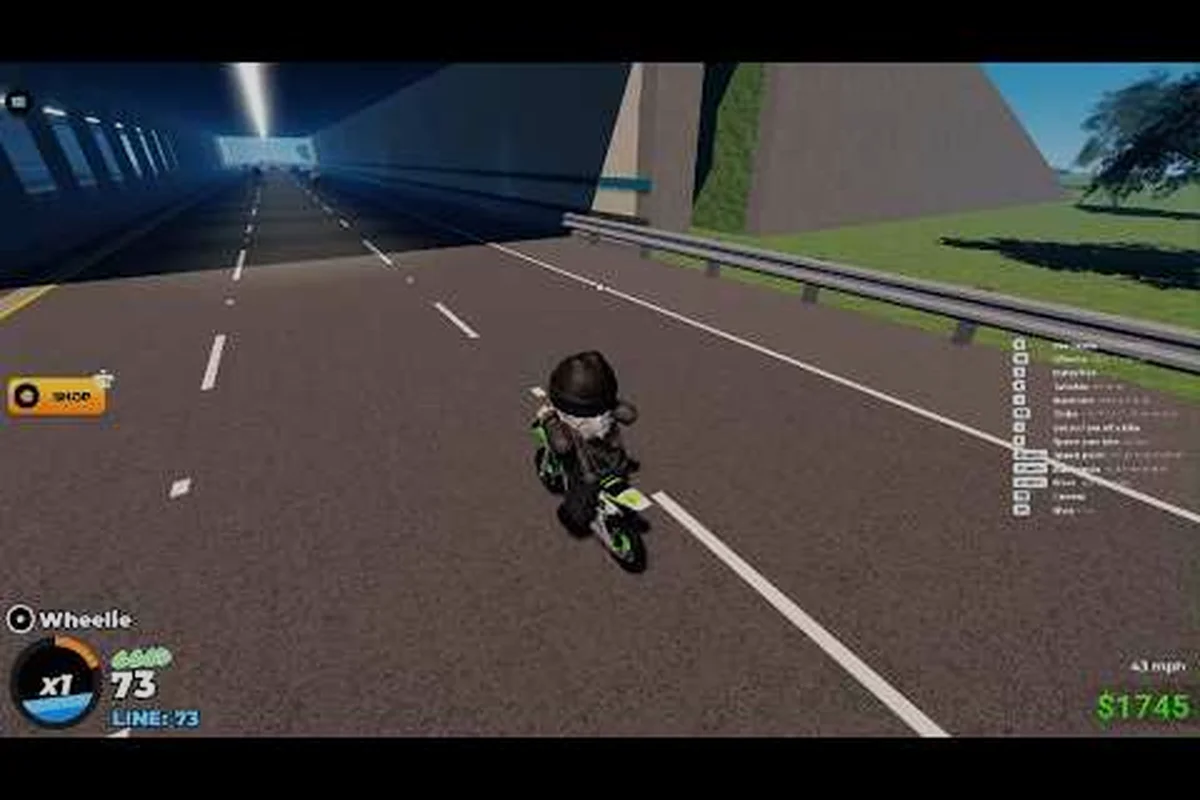
What Bike Universe Bike Balance Actually Means
Bike Universe bike balance is the set of trade-offs the developer has wired into every model in the garage — how much cash each bike earns per second, how fast the durability bar drops under hard landings, and how often the in-game shop rotates its stock so a bike you cannot afford today becomes purchasable tomorrow. Because the game is still young and the developer, FJJWolfie3, ships balance tweaks often, treat every number in this guide as a snapshot of the late-September 2026 build verified against the Bike Universe Roblox game page. The same three families — Dirt, Electric, and Pedal — make up the vast majority of the total bikes in the current roster, and each one tilts the gameplay loop in a slightly different direction.
Players who ignore balance end up overpaying for a flashy top-tier bike, then watching the durability meter collapse in the middle of a long jump. Players who study it buy the cheapest model that still pays for itself in under an hour, then use the shop refresh timer to chase upgrades instead. Everything in this guide builds on that single idea: balance is a budget tool, not a prestige ladder.
Why The Three Families Matter
The Dirt family leans into wheelies, air time, and big-risk jumps — high reward per trick, but bike durability drains quickly when you clip a ramp wrong. The Electric family swaps raw trick income for flat-out speed, so the meter drops slower on long cruises but pays less per second. The Pedal family is the starter bracket: low price, low income, high durability, and the easiest bikes to keep alive while you learn the map. Understanding where each family sits on the speed-vs-durability curve is the first step in any serious bike collection plan, and the table below lays it out at a glance.
| Family | Trick Income | Cruising Income | Durability Drain | Best For |
|---|---|---|---|---|
| Dirt | High | Medium | Fast | Trick hunters, wheelie spammers |
| Electric | Medium | High | Slow | Long-distance cash runs |
| Pedal | Low | Low | Very Slow | New players, learning the map |
How The Balance Loop Closes
Every time you buy a bike, earn money on it, and watch its durability chip down, you are walking through the loop that defines Bike Universe bike balance. The cash you earn feeds the next purchase, the durability loss forces garage rotations, and the periodic bike refresh in the shop keeps the meta from settling. The rest of this guide breaks each of those three legs — durability, refresh, and the total bike count — into the kind of detail you can actually act on.
Bike Durability, Money Earning, And When To Stop Riding
Bike Universe bike durability is the single stat that decides whether a session ends in profit or in a busted frame. Every bike ships with a hidden durability bar that drops on landing impact, on wall hits, and slowly while you cruise. When the bar hits zero, the bike stalls and you have to repair it in the garage for a flat cash fee. Because the repair cost scales with the bike's price, riding an expensive model with reckless form can literally lose you money per hour, while riding a cheap model with good form always turns a profit.
According to community data shared on the Bike Universe Reddit thread in r/Roonby, most new riders bleed their first bike inside twenty minutes because they do not realize landing flat eats durability faster than landing on the rear wheel. The same thread recommends keeping at least 30% of your cash reserve unspent so a surprise repair never forces a downgrade.
The Real Cost Of A Bike
The sticker price of a bike is only half the story. To compare models fairly, you have to fold in repair cost per hour, income per hour, and net profit per hour. The community-tested estimates below come from a late-September 2026 playtest, but the developer rotates values often, so recheck them after every major patch.
| Bike Tier | Sticker Price | Income / Hour | Repair / Hour | Net Profit / Hour |
|---|---|---|---|---|
| Starter Pedal | Free — 5K | ~8K | ~1K | ~7K |
| Mid Dirt | 25K — 80K | ~22K | ~7K | ~15K |
| Top Dirt | 150K — 400K | ~45K | ~18K | ~27K |
| Entry Electric | 60K — 120K | ~30K | ~5K | ~25K |
| Top Electric | 300K — 700K | ~60K | ~14K | ~46K |
Notice how the top Dirt model looks like a clear winner on sticker speed but actually earns less per hour than the entry Electric once repair fees are factored in. That single line is the heart of Bike Universe bike balance: the developer quietly inflates the repair cost on flashy models so the income curve flattens before it spikes.
Durability Habits That Save Real Cash
Three habits separate riders who bank from riders who bleed. First, land on the rear wheel whenever possible — front-wheel impacts drain roughly twice the durability of a clean rear-wheel touchdown. Second, avoid walls. Wall scrapes look like minor visual damage but they silently eat the bar at a much faster rate than landings, and many players do not notice until the bike stalls mid-jump. Third, rotate bikes inside your garage instead of repairing one bike into the ground. Cycling two mid-tier models cuts your worst-case repair bill in half because one is always recovering while the other earns.
A practical rule from community testing: if a bike's durability bar drops below a third in the middle of a session, swap rather than repair. The lost income from the swap window is almost always smaller than the repair fee you would have paid to keep the same bike alive.
Shop Refresh Timers And The Rotation Economy
Bike Universe bike refresh is the timer that controls how often the in-game shop swaps its bike inventory. The shop does not display every model at once; instead, it shows a rotating subset that changes on a fixed cadence, and every rotation shuffles the prices, the families on offer, and the rare models that briefly become affordable. Learning the refresh window is how budget players eventually unlock a top-tier bike without grinding for a full week.
The cadence is short enough to be relevant inside a single play session but long enough that logging off at the wrong time can cost you a rotation. The table below reflects the community-tracked rhythm from the late-September 2026 build, verified against the Bike Universe developer group where FJJWolfie3 posts patch notes.
| Refresh Type | Approx. Interval | What Changes | Best Response |
|---|---|---|---|
| Standard shop rotation | Every 4 — 6 hours | Mid-tier inventory | Buy if a needed family is up |
| Daily featured bike | Every 24 hours | One rare model highlighted | Save cash the day before |
| Weekly banner | Every 7 days | Top-tier model discount | Stack cash for a full week |
| Event refresh | Variable | Limited-time paint jobs | Cosmetic collectors only |
Reading A Refresh Window
When a refresh hits, the first thing to check is which family dominates the new inventory. If the rotation front-loads Electric models, that is the cheapest time to upgrade your cruiser. If it front-loads Dirt models, that is the cheapest time to chase a trick-income spike. Because the rotation is server-time based, the exact minute the shop flips depends on the region your Roblox client connects through, so community testing suggests treating the interval as a window rather than a clock.
Players who want to squeeze the most out of every refresh should bank cash for at least one full daily cycle before spending on a featured bike. Riding a cheap starter for the first day is genuinely faster than buying a mid-tier model at full price, because the income you would have spent on the upgrade keeps earning in the background. This is one of the clearest cases where patience outperforms grinding, and it is the reason experienced players treat the refresh timer like a real money-making tool.
When To Skip A Refresh
Not every rotation is worth chasing. If a refresh drops a top-tier Dirt model you cannot afford for another two days, the smart play is to keep grinding, not to dump your reserve into a down payment. Holding cash across multiple rotations also lets you stack a weekly banner discount on top of the rotation price, which is the cheapest way most players ever unlock the most expensive model in the game. For a wider look at which bikes actually deserve that stack-and-wait strategy, the Bike Universe bike tier list breaks the current meta down by family and price bracket.
How Many Bikes Are In The Current Roster
Bike Universe how many bikes is a question with a moving answer. The roster expands every time the developer ships a new model, and several older models have been quietly retired in past patches. The current count, based on the late-September 2026 build tracked by community dataminers, is roughly two dozen distinct bikes spread across the three families, with another handful of limited-time event models that only appear during seasonal rotations. For the full enumerated list, the complete Bike Universe bike list lays out every model by family, price, and current availability.
The table below summarizes the total bikes in the roster as of this writing, broken down by family and by tier. Treat the exact numbers as approximate — the developer added at least one new model during the September 2026 patch cycle, and the official Bike Universe game page confirms the game is still in active balance tuning.
| Family | Starter Tier | Mid Tier | Top Tier | Limited Event |
|---|---|---|---|---|
| Pedal | 3 | 2 | 0 | 1 |
| Dirt | 1 | 5 | 4 | 2 |
| Electric | 1 | 4 | 3 | 1 |
| Approx. Total | 5 | 11 | 7 | 4 |
| Grand Total | ~27 |
Why The Count Changes So Often
Bike Universe is a young title with a small but active development team, and the same balance philosophy that drives durability tuning and refresh rotations also drives roster changes. When a model underperforms, the developer retires it instead of buffing it, which keeps the garage from filling with dead options. When a family is generating too little income, the developer adds a new mid-tier model to bridge the gap, which is how the Electric family quietly grew from two bikes to eight over the first half of 2026.
This is also why any answer to how many bikes has a shelf life. If you are reading this guide months after October 2026, expect the count to have crept up by one or two models, and expect at least one older Dirt model to have been vaulted in the interim. The roster is not a static museum — it is a live economy.
Collecting Versus Playing
If your real goal is to own every model in the game, plan on a long grind: the cheapest Pedal bikes cost almost nothing, but the top-tier Dirt and Electric models each demand a full week of stacked cash plus a lucky shop refresh window. If your real goal is to win races and chase high scores, the Bike Universe riding fundamentals guide is a better use of your time than chasing completion, because rider skill multiplies the income of any bike by a much larger factor than the bike's sticker price. Balance is what you optimize around; the rest of the loop is what actually wins the run.
Tuning Your Garage Around The Balance Meta
Tuning your garage to the current Bike Universe bike balance meta means choosing one bike per family that covers the most ground, then parking one repair-fodder model that you do not mind burning through on rough landing practice. A two-family core plus a sacrifice bike is the structure most community-tested top earners eventually settle on, because it spreads durability risk across multiple frames and keeps at least one bike earning cash while the others are recovering in the garage.
The table below maps the most common garage archetypes onto the current roster. Pick the one that matches how you actually play — if you love wheelies, the trick-chaser archetype pays the most per session; if you prefer long cruises across the map, the distance runner archetype is more forgiving on durability.
| Archetype | Core Bike 1 | Core Bike 2 | Sacrifice Bike | Best Income Source |
|---|---|---|---|---|
| Trick chaser | Top Dirt | Mid Dirt | Starter Pedal | Wheelies and air time |
| Distance runner | Top Electric | Mid Electric | Starter Pedal | Long cruises |
| Balanced earner | Mid Dirt | Mid Electric | Starter Pedal | Mixed trick + cruise |
| Completionist | Top Dirt | Top Electric | Mid of weakest family | All of the above |
Stacking Cash For A Refresh
The single most common mistake new riders make is buying a mid-tier bike the moment they can afford it, instead of saving for a featured daily or a weekly banner discount. Stacking cash across two or three rotations is uncomfortable, because you are stuck on a starter bike that pays poorly, but the math almost always works out in your favor: a discounted top-tier bike earns so much more per hour that it repays the patience inside a single session. Combine that stack with the Bike Universe money-making tips for steady income, and you can clear the price of the most expensive model in the game in under a week of casual play.
When Balance Changes Break Your Plan
Every time the developer ships a patch, expect at least one number to move. A durability nerf on a top-tier Dirt model can flip it from a clear winner to a repair trap, and a refresh buff that surfaces more Electric models can suddenly make that family the new meta. Recheck your garage after every patch, drop any bike whose net profit per hour has gone negative, and rotate the freed-up cash into whatever the new shop rotation is front-loading. Balance is not a fixed target; it is a moving one, and the players who adapt fastest are the ones who stay profitable.
Frequently Asked Questions
How many total bikes are in Bike Universe right now?
The current roster holds roughly 27 distinct bikes across the Pedal, Dirt, and Electric families, plus a handful of limited-time event models that rotate seasonally. The developer retires underperformers and adds new mid-tier models often, so treat the count as a moving target. Recheck the official game page after every major patch for the latest numbers.
What is the most durable bike family in Bike Universe?
The Pedal family has the slowest durability drain of any family, because the bikes are lighter, slower, and built for learning the map. Once you graduate to a Dirt or Electric bike, expect durability to drop noticeably faster on hard landings. Rotate bikes inside the garage instead of repairing one into the ground.
How often does the in-game shop refresh its bike inventory?
The standard shop rotation flips every four to six hours, the daily featured bike swaps every 24 hours, and the weekly banner discount runs on a seven-day cadence. The exact minute depends on the server region your client connects through, so treat the timer as a window. Saving cash across two or three rotations is the cheapest way to unlock a top-tier model.
Does bike balance change after every patch?
Yes, Bike Universe bike balance changes after most patches because the developer actively tunes durability, repair cost, and shop refresh cadence. A bike that is a clear winner this week can become a repair trap after the next update. Recheck your garage's net profit per hour after every patch, and drop any model that has gone negative.
Is it better to save cash for a refresh or buy a mid-tier bike immediately?
For most riders, saving for one or two shop refreshes is the better move, because daily featured and weekly banner discounts can shave twenty percent or more off a top-tier model's sticker price. The income you lose riding a starter bike for an extra day is almost always smaller than the discount you bank. Combine this with the broader money-making loop and you can clear the most expensive model in the roster in under a week.