
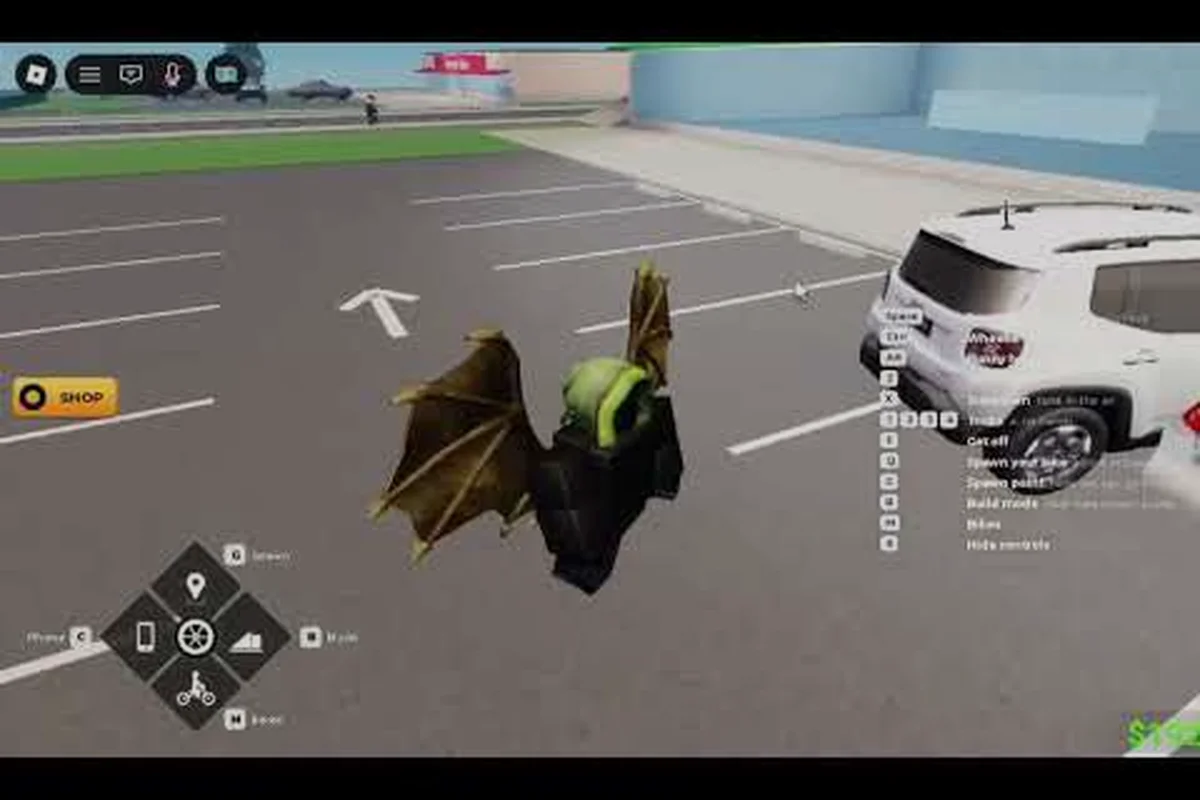
Every rider in Bike Universe starts on the same line, and the gap between a starter bike and a top-tier ride is filled with cash you have not earned yet. Smart money habits decide whether you cruise into your dream bike this week or grind for months. These Bike Universe money making tips walk through the earning loop, the bank system, the money cap, and the strategies veteran players use to climb from a beginner wallet to a six-figure balance without burning out on the saddle.
The Ride-Trick-Earn Cycle in Bike Universe
Bike Universe runs on a simple core: ride, trick, earn, repeat. According to the Bike Universe official Roblox page, cash flows in from riding distance, wheelies, tricks, and race finishes, then loops back out to new bikes, upgrades, and cosmetics. The game logged 13.1M+ visits and roughly 48.9K active players on a late-September 2026 snapshot, which means the economy is busy and bikes move fast.
The three income streams that power the loop are active income (wheelies, tricks, races, deliveries), passive income (idle-style mechanics that pay out when you are offline or riding without focus), and bonus stacks (temporary multipliers that reward chaining actions in a row). If you treat the loop like a job, you will stall. If you treat it like a chain — every action feeding the next multiplier — you climb fast.
Active Income Sources
Active income is what most players think of when they say "grinding." You do something specific, and the game pays you a visible amount. Every payout you earn this way lands in your wallet, which is capped per server session, so efficient grinding means choosing the action that returns the most cash per second rather than per attempt. The strongest sources below are ranked by community-reported payout per minute, factoring in downtime between tricks, the wheelie-meter decay curve, and how often each activity can be chained during a typical 10-minute bike universe play window before fatigue sets in.
| Source | Payout Tier | Skill Needed | Best For |
|---|---|---|---|
| Wheelie holds | Medium | Low (timing) | AFK-ish play while watching a video |
| Trick chains | High | Medium (combo knowledge) | Focused play with no downtime |
| Race finishes | High | High (map knowledge) | Players who already know the routes |
| Long cruises | Low | Very low | Warming up the wallet without pressure |
| Group rides with bonuses | Highest | Medium | Active server hopping during events |
Wheelies and tricks remain the bread and butter because the payout per second is competitive and the skill floor is low. A new player can hold a 30-second wheelie within their first hour, while trick chains reward a little practice with a much bigger multiplier.
Passive Income Sources
Passive income is the underused engine. Bike Universe pays riders a baseline trickle for simply being on a bike, and several mechanics layer extra idle cash on top. Community testing reported by Radex Tips' beginner guide walkthrough suggests that parking yourself on a high-tier bike and letting the meters fill is a slow but reliable way to stockpile while you do something else in another tab. The trick is to maximize the trickle rate by upgrading the Passive Multiplier stat before chasing flashier tricks.
| Passive Source | Trigger | Best Stack With |
|---|---|---|
| Base cruise cash | Riding any bike | Always on |
| Idle offline payout | Logging off with a bike equipped | Long sleep sessions |
| Garage storage bonus | Owning multiple bikes | Bikes from the bike-universe-bike-tier-list guide |
| Server bonus ticks | Staying in a populated server | Group events |
Passive cash is small per minute, but it never asks for your attention, so the real win comes from stacking the base cruise cash on a high-tier bike with the offline payout timer running overnight. Pair that idle drip with active grinding during peak hours — when server bonus ticks and group event payouts spike — and the two streams compound, often pushing you past the daily money cap faster than active grinding alone.
How to Build a Daily Money Routine
Casual players open the game, ride for ten minutes, and wonder why their balance grows slowly. Players who plan a routine double their daily income without playing longer. A solid routine stacks a warm-up phase, a high-intensity phase, and a cool-down phase, then sleeps through the passive phase overnight.
Sample 30-Minute Routine
A 30-minute block is the sweet spot for most riders. It slots cleanly into a school night, yet it is long enough to clear a meaningful chunk of cash — roughly 70K with a mid-tier bike, or higher once you graduate to a top-tier setup and the passive income from your money bank starts compounding. Splitting your evening into one focused 30-minute push, rather than three scattered 10-minute sessions, keeps your combo multiplier and daily streak intact, which is where the real gains in any bike universe money making strategy stack up.
| Phase | Duration | Focus | Cash Target |
|---|---|---|---|
| Warm-up | 5 min | Wheelies on starter bike | ~5K |
| Trick farm | 15 min | Combo runs on mid-tier bike | ~40K |
| Race grind | 8 min | Best map, top placement | ~25K |
| Cool-down cruise | 2 min | Long scenic ride for passive | ~2K |
| Total | 30 min | Mixed stack | ~70K+ |
The numbers above are community-reported estimates from players using mid-game bikes, so your actual haul depends on the bike tier you are currently riding. The point of a routine is not the exact figure — it is the consistency. A 30-minute daily block, repeated five days in a row, puts you well above what an unstructured weekend marathon can match.
When to Grind and When to Cruise
Timing matters because the server is not the same at 3 a.m. as it is at 6 p.m. Busy servers usually come with group bonuses and easier race matchups, while quiet servers give you the map to yourself for long cruise bonuses. The general pattern players report is that weekday evenings and weekend afternoons are the busiest, and weekday mornings are the quietest.
| Time Slot | Server Mood | Best Activity |
|---|---|---|
| Weekday morning | Quiet | Cruise, wheelie, offline payout prep |
| Weekday afternoon | Mixed | Trick chains, mid-tier races |
| Weekday evening | Busy | Group rides, race grinds, bonus events |
| Weekend afternoon | Very busy | Race grinds, group events |
| Weekend late night | Quiet | Long cruise, idle farming |
Smart Spending and the Bike Budget
Earning is half the game. Spending is the other half, and it is where most riders leak cash. The "ride, trick, buy" loop is satisfying, but upgrading cosmetics or jumping to the next bike too early can leave you broke for the rest of the week. The trick is to think in bike budgets — fixed amounts you are willing to spend before you reach the next tier.
Tier Spending Plan
Every bike family in Bike Universe has a soft price range. The exact numbers shift with updates, but the tier ordering is stable enough to plan around. The table below uses a community-sourced range and treats it as a flexible bracket, not a fixed quote.
| Bike Tier | Soft Price Range | Budget Strategy |
|---|---|---|
| Starter (Dirt/Pedal basics) | 0 – 10K | Spend freely, no saving needed |
| Mid-tier (Electric family) | 10K – 100K | Save 30% of income until target |
| High-tier (premium Electric / Sport) | 100K – 500K | Save 50% of income, plan weekly |
| Top-tier (legendary / event drops) | 500K+ | Save 70% of income, grind events |
Holding the line on a budget is how you stop the bleeding. If your target bike costs 300K and you save 50% of a 70K daily haul, you reach it in roughly nine days. If you keep spending on cosmetics, that same window stretches to three weeks.
When to Upgrade vs. When to Save
The most common mistake is upgrading a mid-tier bike when a high-tier bike is two paychecks away. Upgrades feel good in the moment but they often do not beat the raw payout jump of a new tier. The simple rule riders use is: only upgrade the current bike if it sits in the top 3 of your personal tier list and you are at least a week away from the next bike tier. Otherwise, bank the cash and wait.
A useful companion read is the bike universe beginner guide for players who are still picking their first real bike, since the choice of starter affects how fast you can climb into a higher tier.
Banking, Caps, and How to Get Rich Long-Term
Bank management is what separates casual riders from riders with six-figure balances. Bike Universe gives you three real levers: the money bank, the money cap, and a savings discipline that is up to you. The bank and cap are mechanics, the discipline is a habit.
Money Bank Explained
The money bank is a separate pool from the cash you carry on your saddle. Money parked in the bank is harder to spend by accident, and in some cases it earns a small interest tick that adds up over weeks. The key behavior is to make a deposit on every payout, not when you "feel like saving." Players who wait until the end of a session usually spend the balance on impulse upgrades first.
| Bank Action | When To Use It | Net Effect |
|---|---|---|
| Small deposit (10–20%) | After every trick chain | Slow but steady growth |
| Bulk deposit (50%+) | After race grinds or events | Fast growth, less spend temptation |
| Skip deposit | Only when actively buying a bike | Spend must be intentional |
| Withdraw | Only for planned upgrades | Avoid impulse purchases |
The bank is also a psychological tool. Seeing a six-figure balance grow each week feels different from watching a smaller on-hand balance drain. The bike universe how to get money fast companion piece covers the active side of this in more detail.
Money Cap and Long-Term Planning
The money cap is the upper limit your wallet can hold at one time. Once you hit it, additional cash stops stacking until you bank or spend. This is the most common reason new players feel like they are grinding and not getting richer — the cap is full and the overflow is invisible. The fix is to bank a deposit before you hit the cap, not after.
| Player Stage | Typical Cap Pressure | Fix |
|---|---|---|
| Beginner (first 2 days) | Never hits cap | Bank 10% per session |
| Mid-game (week 2–4) | Hitting cap often | Bank 50% per session |
| Late-game (month 1+) | Cap is a daily concern | Bank on every payout, plan big buys |
| Endgame | Cap is a non-issue (always banked) | Discipline is automatic |
Reaching the endgame stage is the answer to anyone asking how to get rich in Bike Universe. Rich is not a single lucky drop, it is the point where discipline, banking, and passive income all run on autopilot so that almost every dollar earned stays in your account. Players who reach this point usually run a small daily routine, bank aggressively, and let passive income handle the long stretches between sessions.
Advanced Strategies and Common Traps
Once the basics click, the next layer of strategy is about avoiding traps and squeezing extra value out of the systems you already use. These are the techniques veteran riders lean on when they want to push past the casual ceiling.
The Multiplier Stack
A multiplier stack is when you layer two or more bonuses at once — for example, riding a high-tier bike during a group event while chaining tricks. The bonuses multiply against each other, not add. That means two 1.5x bonuses stacked together yield 2.25x, not 3x. Knowing this math changes which combos are worth chasing.
| Bonus Source | Typical Value | Stackable? |
|---|---|---|
| Group event bonus | 1.5x – 2x | Yes |
| Trick combo multiplier | 1.2x – 3x | Yes |
| High-tier bike base | 1.3x – 2x | Always on |
| Personal server bonus | 1.1x – 1.5x | Yes |
| Daily login streak | 1.1x – 1.4x | Yes |
The trick is to align the largest bonuses. Logging in for a daily streak, then joining a group event, then doing a trick chain on a high-tier bike produces a much bigger spike than doing each action on a different day. Community players reported by Ricoko Tutorial & Showcase's money guide describe chaining events to bank in a single session what would normally take a full week.
Common Money Traps
Traps are the spending choices that feel good in the moment but quietly drain the wallet over time, and almost every new rider falls into at least one during their first month of active income grinding. The tricky part is that each trap looks like progress — a flashier skin, a faster bike, a limited event purchase — yet the payout math rarely justifies the spend. Tracking every purchase against the bike universe money bank balance for a single week usually reveals the leak, whether it is a cap overflow, a cosmetic splurge, or an event impulse buy that could have waited.
-
Cosmetic over-spend: Skins and trails that do not affect payout but drain the bank.
-
Mid-tier over-upgrade: Pouring upgrades into a bike that will be replaced soon.
-
Impulse event buy: Spending a hard-saved stack on a limited bike without checking the tier list.
-
Cap overflow: Letting the wallet hit max without banking, so cash is lost to the overflow.
-
Marathon burnout: Six-hour grinds that produce diminishing returns after the first hour.
If you find yourself doing any of these regularly, the fix is to bank first, then spend. A small deposit at the start of every session makes impulse buys harder because the money is no longer in your on-hand balance.
Putting It All Together
The fastest path to a rich wallet in Bike Universe is not a single exploit — it is a layered routine. Earn actively with wheelies, tricks, and races, layer passive income by parking on a high-tier bike, bank on every payout before you hit the cap, and save toward your next bike tier instead of upgrading in place. Add a daily 30-minute block and you have a system that runs itself, week after week.
The riders who get rich are not the ones who grind the longest. They are the ones who grind with a plan, bank with discipline, and never let their wallet sit at the cap while cash overflows into nothing. Once that habit is in place, every new bike you want is just a matter of time.
Frequently Asked Questions
What is the fastest way to earn money in Bike Universe?
The fastest single-session method is stacking a group event bonus with a trick chain on a high-tier bike, because the multipliers compound. A steady 30-minute routine of wheelies, tricks, and one race grind typically outperforms a multi-hour unfocused cruise, since the per-minute payout stays high and you avoid the late-session slowdown.
How does the money bank work in Bike Universe?
The money bank is a separate pool that sits outside your on-hand wallet, and it is where you should park cash you do not plan to spend in the same session. Banked cash is harder to spend on impulse, and it earns a small interest tick on long holds. Most riders deposit 50% or more of every race or event payout to keep the bank growing.
Is there a money cap, and how do I deal with it?
Yes, your on-hand wallet has a cap, and any cash earned past the cap is lost until you bank or spend. The fix is to deposit into the bank before you reach the cap, ideally on every payout. Players who treat banking as a per-action habit rather than an end-of-session task never lose cash to the cap.
How do I save up for an expensive bike without grinding all day?
Pick the bike you want, divide its price by your realistic daily income, and bank a fixed share of every payout toward that target. Skipping cosmetic and mid-tier upgrade spending during the save-up window shortens the timeline by weeks. The endgame is making the routine so automatic that you barely think about saving — it just happens.
What is the difference between active and passive income in Bike Universe?
Active income comes from actions you perform in the moment — wheelies, tricks, races, and event bonuses — and it pays out in real time. Passive income is the baseline cash that ticks in while you ride, idle, or stay parked on a bike, and it pays out even when your attention is elsewhere. The richest players stack both, using focused sessions for active spikes and long offline windows for passive ticks.