
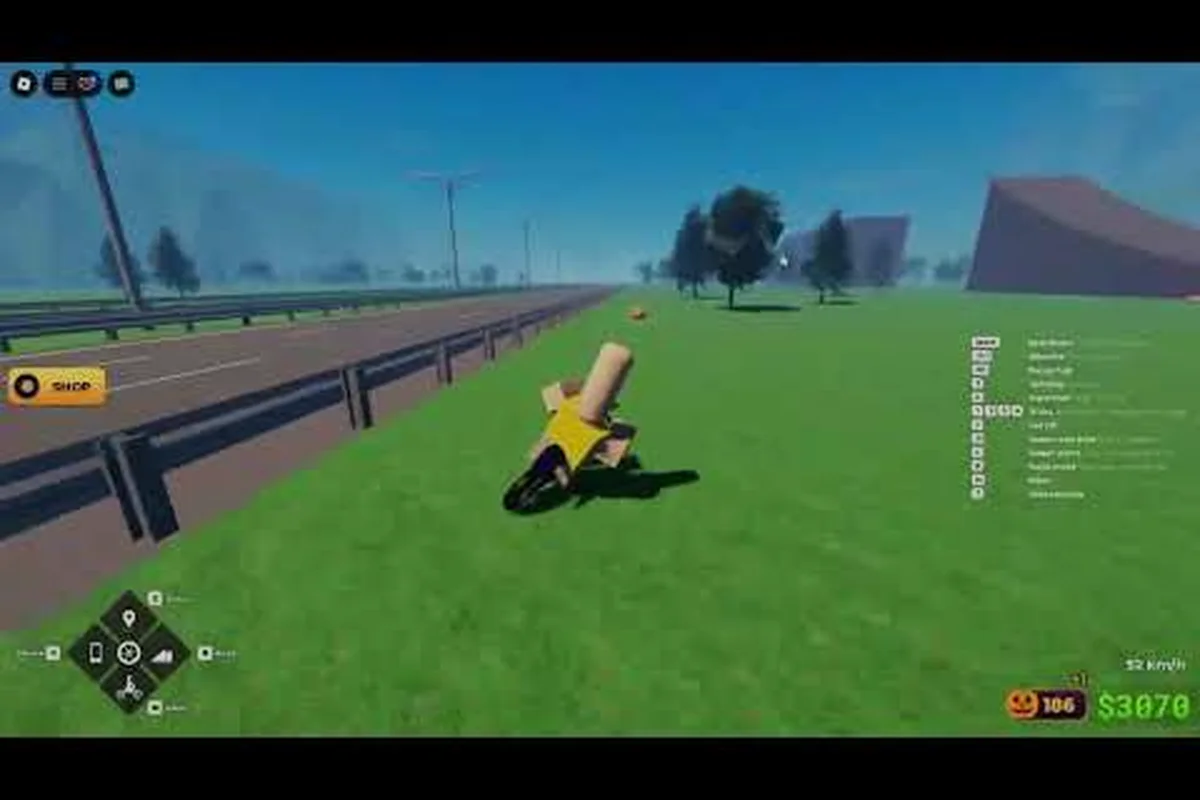
Cash in Bike Universe is the fuel that decides whether your first hour feels like a grind or a smooth climb into the higher-end bike families, and the fastest way to fill the wallet is to stop treating tricks as random flourishes and start treating them as a stacked income engine. Trick combo money is the single largest passive earner in the early game because the payout scales with how long you keep a chain alive, which means the difference between a 200-Cash run and a 5,000-Cash run is almost always combo discipline, not raw luck. The Bike Universe Roblox page describes the core loop as ride, trick, buy, upgrade, and that ride-trick-buy rhythm is exactly what a strong combo session exploits.
This guide covers the chain routes players have stress-tested, the trick order that keeps a multiplier from resetting, the safest early spending priorities, and the Bike Family swaps that meaningfully raise your Cash per minute. By the end, you should be able to walk into a session, pick a route, hold a chain for a full lap, and walk out with enough starter money to skip the painful "stuck on a default bike" phase that drags most new riders down.
How Trick Combo Money Actually Works in Bike Universe
The trick combo system is built on three layered mechanics: a base Cash payout for landing a trick, a multiplier that grows each time you land another trick before the timer expires, and a chain-break penalty that resets the multiplier to 1x the moment you crash, stop, or touch the ground without input. According to the Radex Tips beginner guide walkthrough, the cleanest way to think about a combo is "every trick you land extends the clock, and every tick of the clock turns the next trick into a bigger payout." A single Wheelie pays a small flat amount, but the same Wheelie landed on a 5x combo pays five times that flat amount, which is why chaining matters more than the raw difficulty of any one trick.
| Combo Multiplier | Approx. Payout vs. Base Trick | Real-World Player Goal |
|---|---|---|
| 1x | 100% | Single landing, no chain |
| 3x | 300% | Two follow-up tricks before reset |
| 5x | 500% | Mid-chain grind target |
| 8x | 800% | Sustained route, full lap |
| 10x+ | 1,000%+ | Elite-level chains on flat ground |
The numbers above are community-reported estimates, not developer-published payouts, so treat them as a directional guide rather than a guaranteed figure. What is consistent across player reports is that the multiplier curve is steep early and shallow late, meaning the jump from 1x to 3x is much easier to feel than the jump from 8x to 10x. A new player should aim to consistently hold a 3x to 5x chain for a full minute before chasing anything higher, because the timer window tightens at higher tiers and a single crash costs the entire multiplier.
The Three Trick Types That Feed the Combo
Trick combo money scales differently depending on which trick family you stack. Wheelies are the cheapest to land because the bike is in a controlled, low-risk position, and they extend the timer the same way a backflip does. Stoppies and Burnouts fill the same role but with slightly different input costs, and according to community testing summarized in the Ricoko Tutorial & Showcase video, mixing trick families within a single chain is what most top earners actually do, because each family has its own short cooldown and a different keybind so the input never collides with the previous trick.
-
Wheelies: lowest risk, lowest base payout, ideal for opening a chain on flat asphalt
-
Stoppies: medium risk, medium payout, ideal for chaining into a Wheelie without losing speed
-
Backflips and aerial rotations: highest base payout, highest crash risk, best used near ramps and half-pipes
-
Burnouts: stationary trick, useful for resetting position when the route forces a tight turn
The trick order that tends to hold the longest is Wheelie into Stoppie into Wheelie, because each input is the opposite direction of the last one and your hands never cross over each other on keyboard. Aerial tricks should be saved for known ramp spots, and Burnouts should only be used when the route geometry forces you to a stop, since they do not contribute to forward progress and only extend the chain by a few ticks.
Best Money Bike Picks for Combo Grinding
Choosing the right bike for trick combo money matters more than most new players realize, because every bike family has different acceleration, top speed, and handling profiles, and the multiplier pays out the same regardless of which bike you ride. A slow starter bike that handles beautifully will out-earn a fast premium bike that wobbles on every Wheelie, which is why the early game is best played on a balanced family rather than the flashiest option in the shop. For a deeper look at which bike families the community has tagged as the most beginner-friendly, the starter bikes and Halloween bike breakdown walks through each family with its cash-to-handling trade-off.
| Bike Family | Speed Tier | Handling Tier | Best Combo Role | Approx. Unlock Cost |
|---|---|---|---|---|
| Pedal | Low | High | Opener chains on flat ground | Free / starter |
| Electric | Medium | Medium | Mid-chain sustain routes | Low starter money |
| Dirt | Medium-High | Medium | Aerial chains, ramp routes | Mid starter money |
| Premium Race | High | Low | End-game chains after upgrades | High starter money |
According to the developer group Bike Universe on Roblox, the bike families available in late 2026 are the same three core families (Dirt, Electric, Pedal) plus a rotating set of event and seasonal variants, so treat any "new family" rumor as unverified until the group posts an official announcement. For combo grinding specifically, the Pedal family is the best early money bike because the handling is forgiving enough to keep a 5x chain alive through rough terrain, and the Electric family is the best mid-game money bike because it adds enough top-end speed to chain across longer flat sections without burning the timer.
When to Upgrade, Sell, or Hold
A common mistake is spending starter money on a brand-new bike the moment it unlocks, because the new bike almost always costs more than the upgrade cost of the bike you already have. Community-reported data suggests that upgrading the current bike's engine and handling tiers is roughly 30% to 40% cheaper than buying a same-tier bike fresh, which is why a disciplined "upgrade first, swap later" rule is the most reliable way to protect starter money. The exception is seasonal event bikes, which often ship with a handling profile that no upgrade can match, but those are time-limited and should only be chased if the rest of your garage is already stable.
Building a Chain Route That Holds the Multiplier
A chain route is the specific path you ride during a combo session, and a good route has three properties: long flat sections for easy Wheelie chaining, at least one ramp or curved wall for a high-payout aerial, and a forgiving surface that does not throw random crashes. Most community-tested routes are circular rather than point-to-point, because a loop lets you keep the chain alive across multiple laps without ever braking to a full stop, and braking is the single fastest way to break a combo. The trick locations and stunt mode reference maps several of the most-used chain routes onto specific landmarks in the open world, which is the fastest way to start a session without wasting the first ten minutes scouting.
| Route Element | What It Does | Why It Matters for Combo |
|---|---|---|
| Long straight | Sustains Wheelie input | Extends chain without risk |
| Banked curve | Allows Stoppie transition | Refills the timer between straights |
| Quarter-pipe | Aerial trick opportunity | Big payout spike, resets timer fully |
| Open plaza | Stunt-mode setup | Lets you rehearse chains in a safe zone |
The practical chain rhythm that most experienced riders settle on is roughly 4 to 6 seconds of Wheelie, a 1-second Stoppie transition at the end of the straight, then another 4 to 6 seconds of Wheelie on the next stretch, with a single aerial trick landing at the ramp halfway through the lap. Holding that rhythm across a full lap reliably produces a 5x to 8x multiplier, and adding a second aerial trick at a different ramp can push the chain into the 10x range, but only if both aerials land cleanly, because a crashed aerial resets the entire multiplier the same way a Wheelie crash does.
Common Chain-Breakers to Avoid
The five most common chain-breakers, in order of how often community testing reports them, are: hitting a curb mid-Wheelie, missing a ramp and landing flat, bumping another rider, dropping the bike off a ledge, and accidentally releasing the Wheelie key during a sharp turn. The first three are mostly positioning errors and improve with route familiarity, while the last two are input errors that go away once the player builds muscle memory. A simple drill that helps with input errors is to run a 60-second stunt-mode session before every grind run, because the stunt area has no traffic and no ledges, so the only way to break the chain is to mistime the input, which is exactly the muscle you want to train.
Spending Starter Money Without Wasting It
Starter money is the Cash you have on hand before unlocking your first real bike, and how you spend it decides whether you climb into the mid-game in 30 minutes or get stuck in the early loop for two hours. The most reliable early spending priority, according to community data, is engine upgrade first, handling upgrade second, cosmetic items last, and new bike purchase only when the current bike has been fully upgraded. This order protects starter money because it maximizes the value of every Cash unit, and it avoids the common trap of buying a flashier bike that handles worse and forces you to spend even more Cash to fix the handling later.
| Priority | Item Type | Why It Comes First | Cash Risk If Skipped |
|---|---|---|---|
| 1 | Engine upgrade | Higher top speed, longer chains | Slow grinds, low income |
| 2 | Handling upgrade | Stable Wheelies, fewer crashes | Combo breaks, wasted multiplier |
| 3 | Tires or grip parts | Better cornering on dirt routes | Route-locked to easy tracks only |
| 4 | Cosmetic items | Visual only, no income impact | None, but Cash goes to waste |
| 5 | New bike purchase | Only after maxed upgrades | High cost for marginal gain |
A useful starter money budget is to spend roughly 60% of early Cash on engine and handling upgrades, hold roughly 30% in reserve for the next bike unlock, and treat the last 10% as a discretionary pool for small cosmetics or single-tire swaps. That ratio is not a developer-published number, but it is the rough split that the most successful early-game riders in the community money guide on r/Roonby report as their own spending pattern. The key idea is that a fully upgraded starter bike outperforms a half-upgraded premium bike almost every time, so spending discipline is itself a form of earning free money.
Free Money Sources and Glitch Realities
There is no developer-confirmed money glitch in Bike Universe as of the late-2026 snapshot, and any video claiming a permanent Cash duplication exploit is either outdated, patched, or referring to a now-fixed event. What the community does report as reliable "free money" sources are: the daily login bonus, the first-clear bonus on each race, the small Cash payout for spectating other riders' trick sessions, and the rotating event rewards posted in the official Bike Universe Roblox group. Each of these pays a small flat amount, but stacking all four across a 20-minute session adds up to a meaningful chunk of starter money, which is why smart players run their daily bonuses before starting any chain grind.
The closest thing to a "money glitch" that the community has documented is the chain-reset timing exploit, where a player intentionally breaks a chain right before a big aerial trick, because the small flat payout for the broken chain is sometimes higher than the multiplier payout would have been on a crash. This is not a developer bug, it is just an edge case in the payout curve, and it only works once or twice per session before the timer window tightens. Treat it as a curiosity, not a strategy.
Trick Order and Input Discipline for Sustained Chains
Trick order is the sequence in which you stack tricks within a single chain, and getting the order right is what separates a 3x chain from an 8x chain even on the same route. The general rule is to start with the lowest-risk trick, escalate to a higher-payout trick in the middle of the chain, and end with another low-risk trick right before the timer expires, because that final low-risk trick resets the timer window and lets you start the next lap cleanly. For a full catalog of which tricks count as easy, medium, and hard, the easy tricks and hard tricks reference lists every input with its risk tier and typical payout range.
| Chain Phase | Recommended Trick | Risk Tier | Payout Tier |
|---|---|---|---|
| Opener (0-2 sec) | Wheelie | Low | Low |
| Mid-chain (3-8 sec) | Stoppie or Burnout | Medium | Medium |
| Peak (9-12 sec) | Aerial or backflip | High | High |
| Closer (last 1-2 sec) | Wheelie | Low | Low |
The opener Wheelie matters more than it looks, because it is the trick that establishes the chain and gives you a buffer to plan the rest of the lap. Skipping straight to an aerial as your first trick is a common beginner mistake, because if the aerial misses you lose the chain before you ever built it, which means zero multiplier payout on the very trick that should have been your biggest earner. A disciplined opener is the cheapest form of free money in the game, because every minute of chain you build on top of it pays out at multiplier rates.
Building Input Muscle Memory
The fastest way to internalize the chain order is to spend 5 to 10 minutes per session in stunt mode running the same four-trick sequence on repeat, because stunt mode has no traffic and no timer pressure, so the only variable is the input timing. After a few sessions, the input order becomes automatic and you can start layering route knowledge on top of it, which is when the Cash-per-minute numbers really start to climb. The community-reported benchmark for a "comfortable" player is roughly 3,000 to 5,000 Cash per 10-minute chain session on a stable route, and roughly 8,000 to 12,000 Cash per session once the chain discipline is fully internalized, though those numbers vary heavily by bike and route.
Combo Errors That Drain Trick Money
The five most common combo mistakes are: starting the chain with a high-risk trick, ignoring the timer window during long straights, spending starter money on cosmetics before upgrading, swapping bikes mid-session and resetting the chain, and chasing a higher multiplier instead of securing the current one. Each of these has a simple fix, but the fixes only work if you recognize the mistake in real time, which is why it helps to keep a short post-session checklist of what broke the chain on the previous run.
| Mistake | Why It Hurts Combo Money | Quick Fix |
|---|---|---|
| High-risk opener | Crash kills chain before it starts | Always start with a Wheelie |
| Ignoring timer | Chain dies on a long straight | Add a Stoppie every 6-8 seconds |
| Cosmetic-first spending | Less Cash for upgrades | Lock cosmetics until bike is maxed |
| Mid-session bike swap | Resets chain, wastes multiplier | Finish the run before swapping |
| Multiplier chasing | Lost chains cost more than gained | Hold the current 5x before pushing 8x |
The biggest mindset shift is treating a 5x chain as a finished product rather than a stepping stone, because most players abandon a stable 5x chain to chase an unstable 8x chain and end up with a 2x chain on the next attempt. A 5x chain held for a full lap pays more than an 8x chain held for half a lap, and the consistency builds the muscle memory you need to eventually hold 8x for a full lap. This is also why spending discipline matters even during good sessions, because the temptation to spend a big Cash payout on a flashy new bike is exactly when most players break their own upgrade priority and reset their progress.
When to Reset the Route vs. Push the Chain
A route reset means abandoning the current lap and starting a new chain from the spawn area, which costs you the current multiplier but lets you set up a cleaner chain on a familiar section. The rule most experienced riders follow is to reset if the chain drops below 3x and the next ramp is more than 30 seconds away, because the Cash-per-minute math favors a clean restart over a struggling chain. The rule flips during event weekends, when the developer boosts Cash payouts across the board, because a struggling 3x chain during an event still pays more than a clean 5x chain during a normal day, which is the one case where holding a weak chain is the right call.
Frequently Asked Questions
What is the best money bike for early trick combo grinding in Bike Universe?
The Pedal family is the best early money bike because its high handling tier keeps Wheelie chains stable, and the Electric family is the best mid-game money bike because its medium speed tier lets chains stretch across longer flat sections. Both families are cheaper to upgrade than a premium race bike, which leaves more starter money for the next unlock. The community-reported Cash-per-minute numbers favor the Pedal family for the first two hours, then shift to the Electric family once you have the engine upgrades to support longer chains.
How do you actually chain tricks without resetting the multiplier in Bike Universe?
You chain tricks by landing the next trick before the combo timer expires, and the safest pattern is Wheelie into Stoppie into Wheelie on every flat section, with one aerial trick at a known ramp halfway through the lap. The trick input order matters more than the specific trick, because the timer window shrinks as the multiplier climbs, so a clean input rhythm is what holds the chain together. Stunt mode is the best place to rehearse the rhythm before taking it onto a live route.
Is there a real money glitch in Bike Universe right now?
There is no developer-confirmed money glitch in Bike Universe as of the late-2026 snapshot, and any video claiming a permanent Cash duplication exploit is either outdated or patched. The closest thing to a glitch is the chain-reset timing edge case, which pays a small flat amount on a deliberately broken chain, but it only works a couple of times per session. The reliable free money sources are the daily login bonus, first-clear race bonuses, spectator payouts, and the rotating event rewards posted by the official developer group.
How should I spend my starter money without wasting it in Bike Universe?
Spend roughly 60% of starter money on engine and handling upgrades, hold 30% in reserve for the next bike unlock, and treat the last 10% as discretionary. The first bike should be fully upgraded before any new bike is purchased, because an upgraded starter bike outperforms a half-upgraded premium bike in almost every combo session. Cosmetics can wait until the garage is stable, and seasonal event bikes should only be chased if the rest of the lineup is already upgraded.
What is the fastest way to reach a 5x combo in Bike Universe?
The fastest path to a 5x combo is to open with a Wheelie on a long flat, add a Stoppie transition at the end of the straight, then add a second Wheelie on the next stretch, and land a clean aerial at the first ramp. That sequence reliably produces a 5x multiplier within 10 to 12 seconds on a stable route, and the multiplier holds as long as the next trick lands before the timer expires. Practicing the four-trick sequence in stunt mode is the fastest way to make that sequence automatic.