
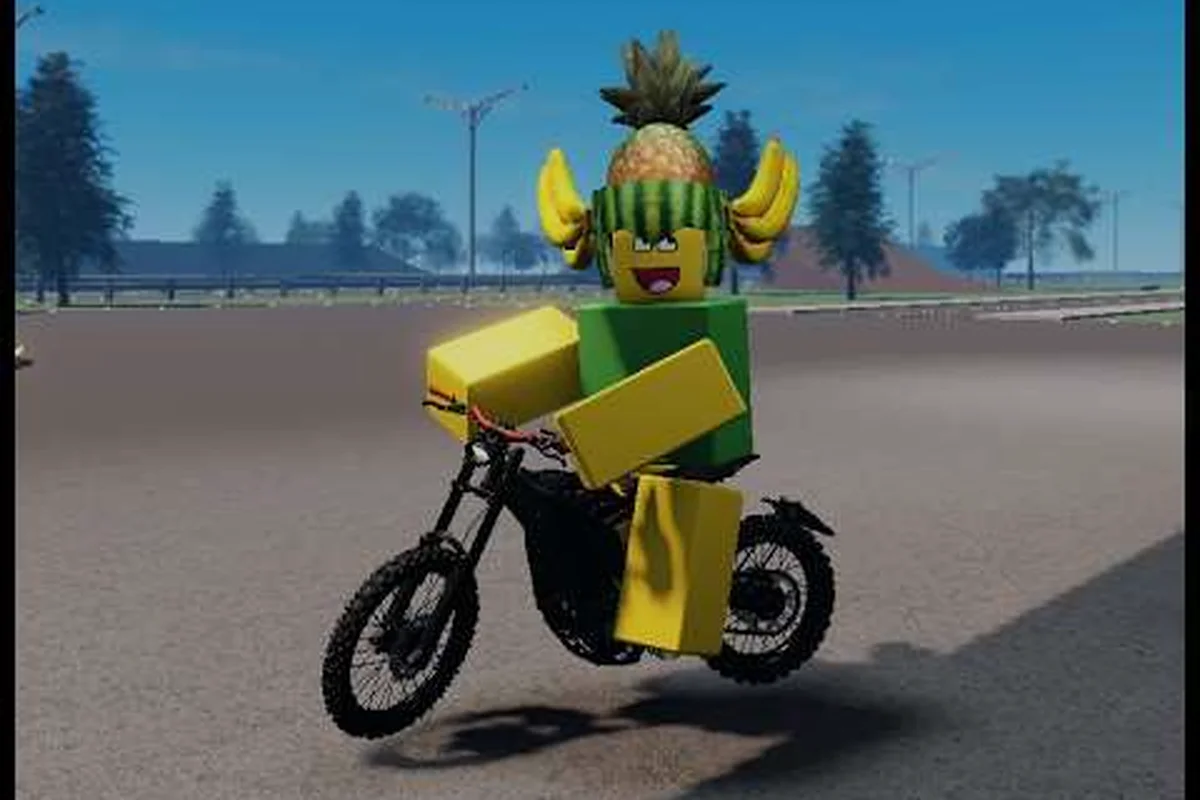
Picking the right Bike Universe race routes is the fastest way to climb the race leaderboard, and most riders waste hours running loops that punish the wrong bike family. The routes worth your time share three traits: long straights for top speed, predictable corners where a clean line matters more than raw acceleration, and surfaces that match the bike you actually own. This guide maps out the locations that consistently produce the best lap times in Bike Universe, breaks down which bike class fits each track, and shows you how to set a competitive time trial benchmark without burning your whole session on bad spawns.
How Race Routes Are Built
Every race in Bike Universe runs on a closed loop built from segments of the open-world map, and the developer has not published a fixed list of named tracks in the way other racing games do. According to the Bike Universe official game page, the loop is shared between the free-roam world and the head-to-head race mode, which means the fastest lines you learn in racing will also save time when you are just cruising for cash.
What Defines a Competitive Route
A competitive Bike Universe race route needs four ingredients to post a strong leaderboard time: a long straight where the top-speed bike can stretch its legs, at least one technical corner where cutting inside saves more time than a wide line, a forgiving surface that does not throw the rider on landing, and a clear sightline so the camera does not lag on the apex. Routes missing any one of these tend to produce average lap times regardless of how good the rider is.
The open-world map is large enough that the loop can spawn in different regions, so the best practice is to scout a new spawn for two laps before committing to a time trial. Riders who skip scouting often chase a time on a track that looked fast but hides a blind jump or a fence that bottlenecks the field.
| Route Element | What Rewards It | What Punishes It |
|---|---|---|
| Long straight | Top-speed bike family (Dirt, Electric) | Heavy bike with poor acceleration |
| Technical corner | Clean inside line, no early lean | Off-camber surface, late braking |
| Blind jump | Confirmed visual cue from scouting | First lap, no reference point |
| Surface change | Wheelie recovery, balanced bike | Pedal bike with low grip |
Bike Families and Route Fit
Bike Universe splits its bikes into three families: Pedal, Electric, and Dirt. The family you pick changes which Bike Universe race routes you will dominate and which ones will bury you in the pack. Pedal bikes are the lightest and reward technical courses with lots of corners, Electric bikes hit the highest flat-out speed and dominate long straights, and Dirt bikes sit between the two with strong jump recovery and mid-range top speed.
| Bike Family | Top Speed | Cornering | Best Route Type |
|---|---|---|---|
| Pedal | Low | High | Tight technical loops, short straights |
| Electric | Very High | Medium | Long straight circuits, time trials |
| Dirt | High | High | Mixed routes with jumps and corners |
For riders still choosing their first bike, the broader bike breakdown in the all-bikes list helps you match a specific model to the family strengths above. A Dirt bike with strong acceleration suits the jump-heavy routes in this section, while an Electric frame rewards the long straights and corner exits where top speed pays off.
Bike Universe Race Locations Worth Running First
The map does not have a public drop-down for race locations, but community testing and player reports have surfaced a handful of regions that consistently produce the best Bike Universe lap times. The locations below are pulled from player-shared clips and run logs on YouTube, not from an official track list, so treat them as community-reported spawn zones rather than confirmed named circuits.
The Coastal Highway Loop
A long stretch of straight road with gentle sweepers and minimal traffic, the Coastal Highway is the most consistent spot for setting a personal best on an Electric bike. Riders report that the clean sightline lets them hold top speed for nearly 60% of the lap, which is why the best time on this loop is usually set by a tuned Electric family bike rather than a Dirt or Pedal. If you are chasing a Bike Universe best time on a long circuit, this is the first location to scout.
The corner at the south end of the highway is the only real brake point, and it is the spot that decides whether your lap lands in the top tier or the middle of the leaderboard. Cut too early and you scrub speed on the apex, cut too late and the fence on the outside will reset your position. Two clean runs through that corner usually separate a top-10% time from a top-50% time on this loop.
The Industrial Park Circuit
A tight, corner-heavy loop through the warehouse district, the Industrial Park circuit is the natural home for Pedal bikes and for any rider who prefers cornering over outright speed. The route has very few long straights, so the Bike Universe race leaderboard for this location is almost always topped by Pedal or lightweight Dirt bikes rather than Electric builds.
| Corner | Entry Speed | Apex Tip |
|---|---|---|
| Warehouse left-hander | Medium | Stay tight, no lean until apex |
| Container chicane | Low | Saw-tooth steering, no straightening |
| Yard exit right | High | Early throttle, hold outside line |
The yard exit right is the most common place to lose time, because the temptation is to straighten the bike before the corner exits. A clean run keeps the bike leaned until the exit curb, then powers out, which is how top leaderboard times on this circuit gain their half-second edge.
The Off-Road Ridge Run
A mixed-surface route that jumps between dirt trails and paved connectors, the Ridge Run is the Dirt bike family's home track. The route punishes any bike without good jump recovery, which is why most Electric bike riders post their worst times of the session here. According to community-shared run videos, the best Bike Universe time trial scores on this route are set on Dirt bikes with mid-grade suspension tuning rather than on stock builds.
The Ridge Run also tends to produce more variable lap times than the Coastal Highway, because surface changes reset momentum and small mistakes compound across the loop. Two consecutive clean laps on this circuit is a stronger benchmark than a single lucky run, and that is how experienced riders judge whether their time is leaderboard-worthy or just a good day.
Setting a Strong Bike Universe Time Trial Benchmark
A time trial run in Bike Universe is a solo lap against the clock, and the difference between a leaderboard time and a forgettable one usually comes down to three habits: clean starts, repeatable lines, and post-lap review. Riders who treat the time trial as a single hot lap almost always score worse than riders who plan two or three warm-up laps before pushing.
Building a Repeatable Lap
The first goal of any time trial session is a clean, repeatable lap, not a fast one. Once you can run three consecutive laps within a second of each other, you have a baseline that you can attack with small changes, and that is how the top of the Bike Universe race leaderboard is built. Riders who chase a fast lap on the first attempt usually crash, lose the line, and have to reset the cooldown before the next push.
| Step | Goal | Time Cost |
|---|---|---|
| 1. Spawn check | Confirm route and surface | 5 seconds |
| 2. Warm-up lap | Find apex markers | 30-45 seconds |
| 3. Push lap | Full speed, clean line | Lap time target |
| 4. Cooldown | Wait for next eligible run | Variable |
Riders looking to time their race attempts and avoid wasted cooldowns can cross-check the timing rules in the race cooldown breakdown, which explains how the timer resets between runs and what triggers a failed attempt. Knowing that window matters most on fast sprints, because a single early restart can cost you the next three minutes of farming.
Reading the Leaderboard Tiers
The Bike Universe race leaderboard is sorted by best time, but the gap between ranks is rarely even. On most community-tracked routes, the top 1% of times are within two seconds of each other, the next 9% spread across five seconds, and the rest of the board spreads across ten or more. That shape means a rider who jumps from a middle-board time to a top-10% time is doing more work than a rider jumping from top-10% to top-1%.
If your current time is more than five seconds off the top of the board, focus on the route element that costs you the most time first, whether that is the entry to a corner, the exit, or the jump between segments. Riders who try to fix everything at once usually regress, because clean lines depend on muscle memory and a fresh change to the wrong corner often breaks the line on the corners that already work.
Common Mistakes That Cost Riders Lap Times
Most riders chasing a better Bike Universe time trial score are not losing time because of their bike, they are losing time because of small repeatable mistakes. The list below is drawn from community-shared run clips and from the kind of errors that show up again and again in posted leaderboard attempts. None of these are deep mechanical issues; they are habits that a single focused session can fix.
Braking Too Early or Too Late
The single most common time loss in Bike Universe race routes is braking at the wrong point. Riders who brake too early scrub speed before the apex and arrive at the corner slow, which costs time on the exit. Riders who brake too late either run wide or hit the fence, which costs even more time. The fix is to pick a single visual marker on each corner, like a sign post or a pavement crack, and brake at the same point on every lap until the line becomes automatic.
A second habit that costs time is braking while the bike is still leaned over. The game punishes mid-corner braking with a wider line, so the cleanest runs lift the brake before the lean and only tap it again if the entry speed was too high. Riders who nail this habit on one corner usually find that the same habit transfers to every other corner on the loop.
Skipping the Warm-Up Lap
Pushing a time trial on the first lap of a fresh spawn is the second most common mistake. The route may have changed, the surface may be wet or dusty, and the camera may not be settled, all of which cost time on the first push. A single warm-up lap, run at 80% effort, almost always produces a faster push lap than going straight into a hot attempt, because the rider knows where the apex is and where the jumps land.
This is also why routes that look identical between sessions can produce very different leaderboard times. A spawn that looks the same but feels different is usually the reason a personal best falls short of the leaderboard, and the fix is to treat every fresh spawn as a new route rather than as a repeat of the last one.
Wrong Bike for the Route
The third common mistake is bringing the wrong bike family to a route that punishes its strengths. Electric bikes on a tight corner circuit, Pedal bikes on a long straight, and Dirt bikes on a clean paved loop all produce leaderboard times that look slow even when the rider is doing everything else right. The match between bike and route is the foundation under every other improvement, and a wrong match cannot be fixed with cleaner lines or better braking.
| Route Type | Best Bike Family | Why |
|---|---|---|
| Long straights, few corners | Electric | Top speed is the limiter |
| Tight corners, short straights | Pedal | Lightweight, agile |
| Mixed jumps and corners | Dirt | Jump recovery, mid speed |
For riders still building out their garage, the race rewards and bike tuning guide explains which upgrades translate to measurable time gains on the leaderboard rather than just visual changes. The short version is that engine and tire upgrades usually pay back faster than cosmetic parts, so spend your race purse on those slots before touching paint or decals.
Squeezing Seconds Off the Race Leaderboard
Once the basics are clean, the next step is squeezing out the last second or two that separates a top-10% time from a top-1% time. These gains are smaller and harder to find, but they are also where the leaderboard gets decided, because most riders are already braking at the right point and running a warm-up lap.
Wheelie Management on Long Straights
A controlled wheelie on a long straight does two things: it looks flashy, and more importantly, it can carry extra speed through the lean-back if the bike is tuned for it. The trick is to start the wheelie at a known speed marker, hold it through the middle of the straight, and drop the front wheel before the brake point so the bike is stable going into the corner. Riders who wheelie too early or too late usually lose time because they arrive at the corner unstable.
The mechanics of a clean wheelie are covered in the wheelie speed and balance guide, which walks through the timing window for a sustained wheelie on each bike family. Combining a clean wheelie on the straight with a clean line through the corner is one of the few places where riders can reliably find a half-second on a familiar route.
Track Memory and Visual Cues
Top leaderboard runners use the same visual cue at the same corner every lap, which is why their lines look automatic. A single landmark, like a specific fence post, a painted line on the road, or a tree at the apex, gives the rider a reference that does not change between laps. Riders who rely on feel rather than a fixed cue tend to drift their braking point by a few bike lengths every lap, which is enough to drop them out of the top tier.
The other habit top runners share is that they run the same route in the same session until they hit a personal best, rather than rotating through three or four routes in one sitting. Lap times are built on muscle memory, and switching routes every few laps resets that memory, which is why a focused 30-minute session on one route almost always beats a one-hour session split across three.
Reading the Race Versus the Time Trial
Head-to-head races and solo time trials reward different things, and a line that wins a head-to-head may not be the fastest line on a time trial. In a head-to-head, drafting off another rider, blocking the inside line, and forcing a wide exit are all legitimate tools, and they can save or cost time depending on the opponent. In a time trial, the rider is alone, so any line that adds risk without adding speed is a net loss.
Riders who post the strongest times on the Bike Universe race leaderboard usually run solo time trials on a clean spawn and only switch to head-to-head races for practice, because the head-to-head teaches racecraft and the time trial teaches pure line and speed. Mixing the two in a single session tends to produce inconsistent results, because the muscle memory for a defensive line is different from the muscle memory for a pure-speed line.
How to Pick the Right Route for Your Bike
With three bike families and three route archetypes, the best route for you is the one that matches the bike you actually own, not the one that looks fastest in a clip. A rider on a stock Pedal bike is better off running the Industrial Park circuit than chasing an Electric bike's Coastal Highway time, and a rider on a tuned Electric bike should stay on long-straight loops rather than fighting a Dirt bike on the Ridge Run.
Matching Bike to Route in Practice
Start by identifying which bike family you spend the most time on, then run the route that rewards that family. If you are still early in the game and have not committed to a family yet, the Dirt family is the most forgiving across all three route archetypes, because it can hold its own on long straights, on technical corners, and on mixed surfaces. The Pedal family is the hardest to commit to early because its top speed is a real ceiling on the long-straight circuits.
| Your Bike Family | Route to Prioritize | Why |
|---|---|---|
| Pedal | Industrial Park | Corners reward agility |
| Electric | Coastal Highway | Straights reward top speed |
| Dirt | Ridge Run | Mixed surface rewards balance |
The other factor to consider is the session length. A rider with 20 minutes available is better off running two clean laps on a familiar route than trying to learn a new route from scratch, because route memory is built across laps, not across minutes.
When to Switch Routes
Switch routes when your current time has plateaued for two or three sessions in a row, not after a single bad lap. A plateau usually means the route no longer has time to give, which happens when the rider has already cleaned the main corners and the warm-up habit. Switching to a new route resets the learning curve and often unlocks a new personal best, because the rider is focused on line rather than on chasing a familiar benchmark.
A second reason to switch routes is the cooldown. If the Bike Universe race cooldown is forcing long waits between attempts, switching to a different route lets the rider stay productive during the wait, which is how experienced runners keep their session sharp rather than cooling off between attempts.
Putting It All Together
The fastest Bike Universe race routes are the ones that match your bike family, reward a clean line over raw aggression, and let you build a repeatable lap before you push for a personal best. The Coastal Highway rewards Electric bikes and long-straight runners, the Industrial Park rewards Pedal bikes and corner-focused riders, and the Ridge Run rewards Dirt bikes and mixed-surface specialists. Pick the route that matches your bike, scout it for two laps, run a warm-up, and only then push a time trial attempt.
The leaderboard is built on small, repeatable gains rather than on a single hot lap, which is why riders who focus on clean starts, fixed visual cues, and matched bike-to-route pairings almost always outscore riders who chase a fast lap on the wrong bike. Treat every fresh spawn as a new route, treat every leaderboard attempt as the third lap of a session rather than the first, and the times will follow.
Frequently Asked Questions
What are the best Bike Universe race routes for Electric bikes?
The Coastal Highway loop is the strongest pick for Electric bikes because it has the longest clean straight in the map and minimal corner work, which lets a top-speed Electric hold its advantage for most of the lap. According to community-run leaderboard attempts, top Electric times on this route come from a clean entry into the south-end corner rather than from extra straight-line speed, because the corner is the only real brake point on the loop.
How do I set a competitive Bike Universe time trial time?
Run two warm-up laps on the same spawn to learn the line, then push a single clean attempt with a fixed visual cue at every corner. Riders who build a repeatable lap first and attack it second usually score in the top tier of the leaderboard, because the time gains come from consistency rather than from a single lucky run. Skip the first-lap push and the cooldown will eat most of your session for nothing.
Where does the Bike Universe race leaderboard update?
The leaderboard updates at the end of each completed time trial run, and times are sorted by best personal best rather than by average. A single new personal best on a route will jump you up the board immediately, which is why focused runners attack one route at a time instead of spreading attempts across multiple locations in the same session.
What affects Bike Universe lap times the most?
Braking point is the single biggest factor, and riders who brake at a fixed visual marker on every lap post faster times than riders who brake by feel. Bike-to-route match is the second biggest factor, because the wrong bike family cannot be saved by a clean line on a route that punishes its strengths. Warm-up laps and corner entry speed are the next two factors, and they compound across the lap rather than showing up at a single corner.
Are the Bike Universe race locations officially named?
No, the developer has not published an official list of named race tracks. The route names used by the community, like Coastal Highway, Industrial Park, and Ridge Run, are player-given labels for the regions where the race loop tends to spawn, and they can shift between patches. Treat the route names as community-reported zones rather than as confirmed official tracks, and scout every fresh spawn before pushing a time trial attempt.