
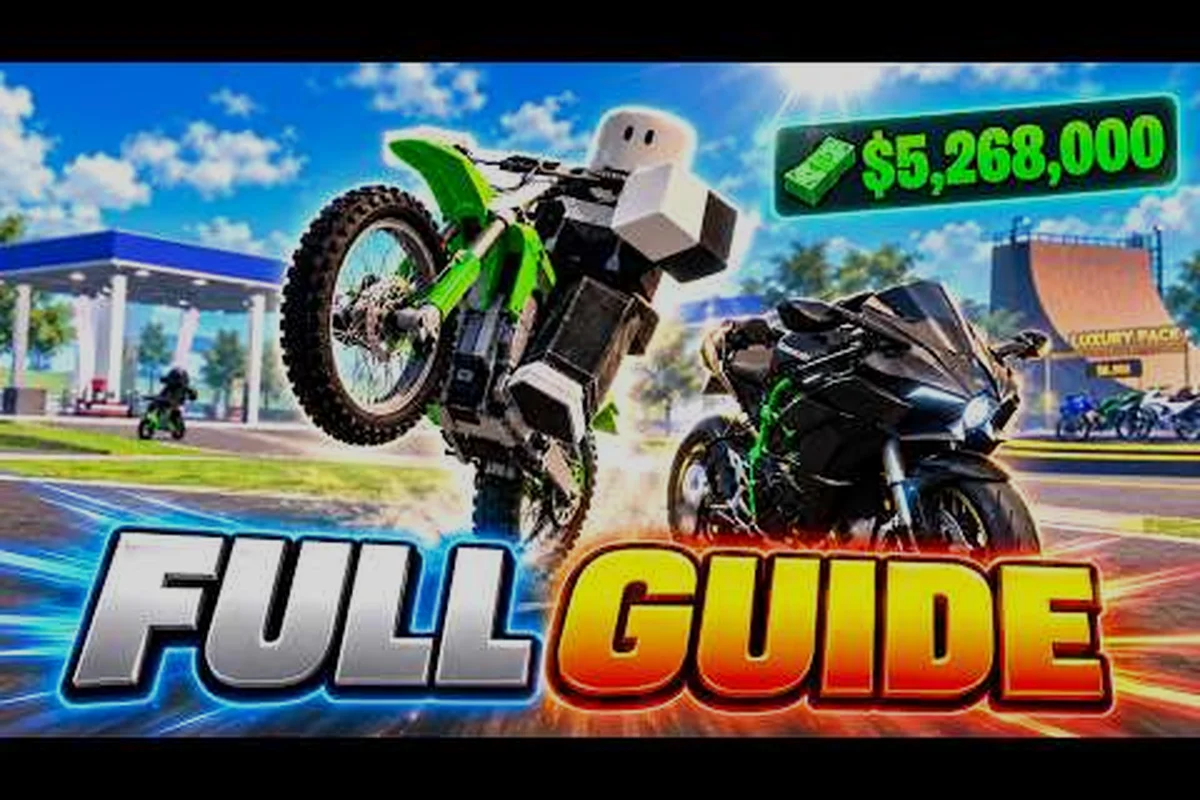
Sharper Bike Universe racing tips start with the basics most riders overlook: choosing the right bike family for the route, holding clean cornering lines, and timing your boost when nobody is on your tail. According to the official Bike Universe page on Roblox, competitive racing is built around head-to-head matchups where small mistakes cost the entire lead, so dialing in those fundamentals is what separates podium finishes from mid-pack crashes. This guide breaks down race tactics, challenge modes, and PvP patterns you can apply tonight.
Core Racing Fundamentals Every Rider Needs
Before chasing advanced strategies, lock down the riding fundamentals that decide every Bike Universe competitive racing match. The map is large, the bike families behave differently, and the race start alone can gift — or steal — a two-second lead.
Choosing the Right Bike Family for Each Route
The three main families — Dirt, Electric, and Pedal — each handle corners, jumps, and straights very differently. Electric bikes accelerate fastest off the line, which matters most in a short sprint race, while Dirt bikes hold momentum through rough terrain and uneven surfaces. Pedal bikes are the budget default but struggle to keep pace in a serious multiplayer race, so they are best reserved for low-stakes practice.
| Bike Family | Best Race Situation | Strength | Weakness |
|---|---|---|---|
| Dirt | Mixed terrain, off-road shortcuts | High top speed, durable | Slower initial acceleration |
| Electric | Short sprints, flat tracks | Fastest launch, smooth handling | Lower stamina on long routes |
| Pedal | Casual practice, early progression | Cheap, easy to control | Slowest top speed, weak in PvP |
Master the Race Start
Every race begins with the same countdown, and the first three seconds decide the gap. Hold a steady throttle during the timer so your boost bar fills early, then release it the instant the gate drops. If you let the bar overcharge before the green light, you start with a partial bar and lose a half-second out of the gate. Players on community clips such as TonyCool's a YouTube guide video consistently show that riders who pre-charge and release cleanly take the first corner ahead of the field.
Race Tactics That Win Multiplayer Events
Once the fundamentals are muscle memory, the next layer of Bike Universe race tactics is all about reading opponents and picking smart lines through traffic. Multiplayer race lobbies usually pack 4–8 riders into the same starting grid, which means crashes, bottlenecks, and rubberbanding gaps open up if you know where to look.
Hold the Inside Line, But Pick Your Corner
The inside line is the shortest path through a turn, and holding it through the first corner of any race is standard. The mistake riders make is forcing the inside line on every turn, because a smart opponent will swing wide, draft past you on the exit, and use the straighter run-out to reclaim the lead. The better pattern is to take the inside on tight hairpins and switch to the outside on sweeping curves, where the longer arc lets you carry more speed.
Draft, Slipstream, and Time the Overtake
Drafting is the single highest-value mechanic in a Bike Universe multiplayer race. When you sit directly behind another rider, your bike's speed efficiency climbs because you are riding through cleaner air. The overtake itself should happen on a straight, just before a corner, so that you enter the turn ahead. Overtaking inside a corner almost always ends in a collision and a reset.
| Overtake Spot | Risk Level | Reward |
|---|---|---|
| Mid-straight | Low | Small lead, easy to defend |
| Pre-corner straight | Medium | Big lead into the turn |
| Mid-corner | High | Crash risk, frequent reset |
| Post-corner exit | Low | Steady lead, harder to counter |
Use the Map's Vertical Features
Ramps, hills, and bridges across the open-world map are race-shaping tools, not scenery. Taking a hill at full throttle gives you a brief air-time advantage because the camera angle and momentum let you skip a chunk of track. Reserve those jumps for stretches where you already hold a lead, since mistimed air often costs a full second on landing. For a deeper breakdown of jump timing and landing angles, the racing tactics overview in our race guide walks through the same map with annotated routes.
Race Challenges and How to Clear Them
Race challenges in Bike Universe are time-limited tasks that push specific skills — clean laps, no-crash runs, and speed benchmarks. They rotate frequently, and clearing them is the most reliable way to stack cash for upgrades without grinding free-ride routes.
Understanding Challenge Types
Most race challenges fall into one of three buckets, and the reward value scales with difficulty. Easy challenges usually ask for a single clean lap, medium ones demand no-crash runs on longer routes, and hard ones set tight time targets that only the best bikes can reach.
| Challenge Tier | Typical Task | Reward Range | Best Bike Choice |
|---|---|---|---|
| Easy | 1 clean lap | Small cash | Any bike |
| Medium | 3 laps, no crash | Medium cash | Electric or Dirt |
| Hard | Sub-target time | Large cash | Top-tier Dirt |
Stack Cash Between Challenges
Community reports on the Bike Universe Reddit thread and TonyCool's video both confirm that the cleanest cash-per-minute loop is a short stack: clear one easy challenge, then one medium, then return to free-ride. This pattern works because the easy challenge recharges your focus, the medium challenge pays a meaningful bonus, and the free-ride between them keeps your bike's wear from spiking. If you want a more detailed map of where the cash piles up between challenges, our money locations breakdown covers the highest-yield routes.
PvP Race Strategies for 1v1 Matchups
PvP race matchups in Bike Universe are the cleanest test of pure skill, because there is no pack traffic to hide behind. Every Bike Universe PvP race comes down to who reads the other rider's habits first, and the meta is shaped by three recurring patterns.
Force the Mistake, Don't Chase the Lead
The fastest 1v1 finishers are rarely the ones who bolt ahead on lap one. Instead, they stay a bike-length behind their opponent, mirror their lines, and wait for the opponent to over-commit on a corner. Once the rival loses a fraction of a second on a bad apex, the trailing rider takes the inside and pulls away on the exit. Chasing the lead, on the other hand, forces you into riskier lines and usually ends in a collision.
Read Boost Patterns and Punish Them
Boosts are visible, audible, and predictable. The moment your opponent triggers a boost, you know they are about to commit to a specific line for two to three seconds. The counter is to hold your own boost until their bar empties, then deploy yours on the next straight. This pattern, repeated over three or four laps, usually breaks even a slightly faster bike because the lead keeps evaporating at the end of each straight.
Map Awareness Beats Raw Speed
In a 1v1 Bike Universe PvP race, the rider who knows the map wins more often than the rider with the better bike. Memorize the three sharpest corners on each route, because that is where 80% of mistakes happen, and rehearse your exit speed on each one until it is automatic. The official game page lists multiple track variations, and community testing on the Bike Universe Roblox group confirms that the dev team rotates which routes appear in 1v1 lobbies, so being able to adapt on the fly matters as much as memorizing any single track.
Multiplayer Race Lobbies: Pack Tactics
Multiplayer race lobbies are a different beast from 1v1, because the pack dynamic creates opportunities and hazards that simply do not exist in solo runs. A smart rider in a Bike Universe multiplayer race uses the pack as a shield early and a weapon late.
Survive Lap One, Attack Lap Three
Lap one of any packed lobby is a demolition derby, and the rider who finishes lap one in the top three almost always finishes the race in the top three. Hold a defensive line through the first corner, brake earlier than feels necessary, and let the aggressive riders sort themselves out ahead of you. By lap three, the field has thinned, the leaders have used their boosts, and the smart rider who conserved resources can sweep past.
Use the Pack as a Mobile Wall
In a four-to-eight-rider lobby, the riders ahead of you form a moving wall that blocks wind and slows anyone trying to draft past. Sitting in fourth or fifth place is often the fastest path to second, because you draft off the lead group and only commit to an overtake once a rider ahead crashes or runs wide. The trick is patience — the pack punishes early moves and rewards riders who wait for openings.
Watch the Leaderboard and the Cooldown
The official game page shows a live leaderboard during events, and the cooldown timer between races is short but real. If you want to climb the leaderboard, treat each race as one data point rather than one finish line. Track your average placement across five races, not your single best result, and adjust your bike and your starting position based on the trend. For a closer look at how cooldown windows affect race entry, our race cooldown guide maps the timing windows so you can plan session runs.
Choosing the Best Bike for Race Challenges
Race challenges are where bike choice matters most, because the timer does not care about your personal pride. Picking the right ride for the route is a guaranteed way to shave seconds off your lap time, and the Bike Universe competitive racing meta favors two clear winners.
Top-Tier Dirt Bikes for Long Routes
Dirt bikes dominate routes that mix terrain, because their suspension and grip let you carry speed across uneven ground. If the challenge is a long route with three or more off-road sections, a maxed Dirt bike will outpace an Electric bike of similar tier, even though the Electric bike wins the launch.
Top-Tier Electric Bikes for Sprint Routes
Electric bikes own short, flat routes because their launch acceleration is unmatched. In a sub-60-second sprint challenge on a paved track, the Electric bike's first-corner exit speed makes up for its lower stamina and weaker top-end. Pair it with a clean cornering line and the sprint becomes almost free.
Mid-Tier Bikes Are the Smart Pick for Practice
Spending your entire cash reserve on a top-tier bike before you have the fundamentals down is one of the most common mistakes community guides flag. A mid-tier bike that you can replace after a crash is more useful than a top-tier bike you are afraid to ride aggressively. VendoPlus's Bike Universe cash guide on YouTube walks through this exact trade-off and shows how a steady upgrade path beats a single big purchase. For a full breakdown of every bike family and their race-relevant stats, our complete bike list catalogs each model with the numbers that matter for racing.
Building a Session Routine That Works
The riders who climb the Bike Universe competitive racing leaderboards do not just play more — they play with structure. A repeatable session routine turns random races into measurable progress, and the routine below is what most top finishers follow.
Warm-Up With Two Easy Races
Start every session with two easy races on routes you already know. The goal here is not to win but to get your hands warm and your boost timing calibrated. Skip the temptation to chase a fast lap on lap one and instead focus on clean apexes and clean exits.
Run Three Hard Challenges in a Row
Once you are warm, queue three hard challenges back-to-back. The back-to-back format matters because each challenge gives you a brief rest window, and the skill you build in challenge one carries straight into challenge two. If you want a full breakdown of which challenges pay the best rewards, the race rewards overview lists the current top earners.
Finish With a Pack Race
End the session with a single pack race, because pack dynamics are the hardest skill to drill and they are also the most rewarding. Treat the pack race as a controlled experiment: pick one tactic to test (overtake timing, defensive line, draft management) and grade yourself at the end. Over a week of sessions, those single-tactic experiments compound into a complete toolkit.
Frequently Asked Questions
What is the best bike for Bike Universe racing tips focused on PvP matchups?
A top-tier Dirt bike is the most versatile pick for a Bike Universe PvP race because it holds speed across mixed terrain and survives the inevitable contact in packed lobbies. Electric bikes are faster off the line but lose their edge once the route turns rough, so they are a specialist pick for flat sprint tracks only.
How do race challenges differ from regular multiplayer races in Bike Universe?
Race challenges are solo time-attack tasks with set reward tiers, while multiplayer races are head-to-head events where placement matters more than raw lap time. Challenges reward consistency and clean lines, and multiplayer races reward drafting, pack awareness, and corner-defense. The best riders practice both, since the skills transfer.
Can I win a multiplayer race without the fastest bike?
Yes, and most multiplayer race wins in Bike Universe actually go to riders on mid-tier bikes who know the map. Drafting, defensive cornering, and patience on lap one let a smart rider on a B-tier bike beat a reckless rider on an S-tier bike. The bike matters, but the rider matters more.
How often do race tracks rotate in Bike Universe?
According to community testing, the developer rotates the active race track pool regularly, and the official Roblox group posts announcements when new tracks drop. Track rotation means memorizing one route is not enough — plan to learn at least three solid routes so you are ready for whatever the lobby throws at you.
What is the fastest way to stack cash for bike upgrades between races?
The fastest cash loop is a short stack of one easy challenge, one medium challenge, and a brief free-ride burst on a high-yield money route. This pattern keeps the bike's wear low, the rewards steady, and the session focused, which is how most top riders fund their next upgrade within a single sitting.